01 January 2022

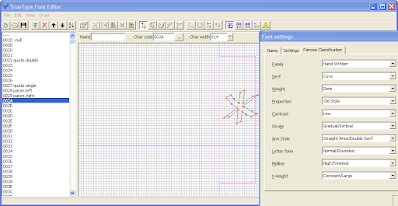
TTFEdit simple true type outline editor

This little gem is made by japanese programmer Yuno dated back to 2003. This is an opensource software, its borland c++ source sadly never archived : http://uri.sakura.ne.jp/~cosmic/yuno/download/ttfeditsrc.lzh. You could open and edit ttf font or create it from scratch, there is also reference image feature that help you trace existing bitmap text sample or hand-drawn font.

I have bing translate this app into english (using resource hacker). As the name implied only ttf format supported, no fancy modern web fonts format, no opentype just TTF.

TTFEdit show Panose spec property

This outline editor is nice companion to Microsoft Visual TrueType.
Note: You can't directly open font from %WINDIR%\Fonts from the open file dialog. Copy it somewhere else first.

download: https://sourceforge.net/projects/xpitory/files/static-builds/ttfedit.7z/download (400KB)

31 December 2021

WebAssembly in Windows XP

While it has been 15 years since I did real Webdev work (php + dhtml mind you), my recently build clang toolchain need some wasm trial. This tutorial https://depth-first.com/articles/2019/10/16/compiling-c-to-webassembly-and-running-it-without-emscripten/ will serve as reference, emscripten itself being mostly python based might be works on XP.

clang download: https://sourceforge.net/projects/xpitory/files/clang/ (25MB)

to check what's supported target:


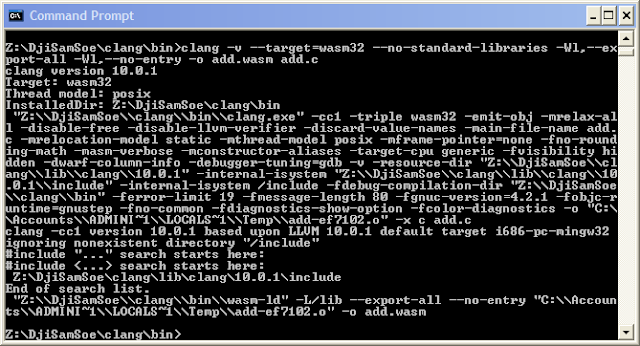
Compiling add.c example (I added -v to see more detail):


As the article explained browser security mostly prevent direct access like that, so lets skip to python webserver:


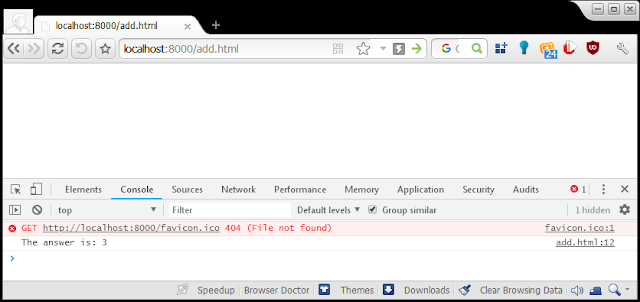
To test add.html, 360 Chrome Browser 69 is used:


That's it. I think...


WASI runtime is included in the clang package above, but haven't follow up the article to test it. Basically think of wasi sdk like mingw + libgcc + libstdc++, so instead of relying on emscripten prepared libraries you build your own from scratch. Note that since llvm 12 there is llvm own libc, not sure how different is this from wasi-libc.

next time I will demostrate using clang 10 as usable Visual C++ 2019 build tools replacement, all within XP box.

25 December 2021

Lightweight PDFium based reader

For a long time the best lightweight PDF reader for XP is SumatraPDF 3.1.2 which based on MuPDF. There is  alternative such poppler/xpdf and ghostscript, all of them use rather unfriendly GPL-like license. PDFium which used within Chromium is new BSD license or APL 2.0 but has crude packaging (typical of google).

I stumbled on https://github.com/vfr/UXReader-Windows a nice pure Win32 API UI library for pdfium, then made little quick change on UXReaderMainWindow.cpp: commenting ChangeWindowMessageFilterEx (which break XP) and add simple argument passing using CommandLineToArgvW so it now will open file from association / cmdline. Note that it's just a barebone demo for the library but IMHO suck less than FoxIt reader. I mean whats the point having a light renderer if you bloat everything else.

Campared to MuPDF I think it's faster (and smaller too), still when rendering image-rich page with multiple overlays and transparency nothing beats Adobe Reader!

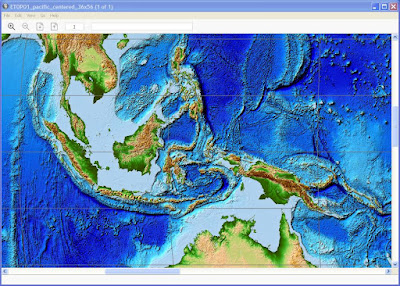
opening large ETOPO map

download: UXReader.7z (1.6 MB) require VC++ runtime 2017

24 December 2021

Python 2.7 and TLSv1.3

Python 2.7.18 is the last bugfix version of any python that officially support Windows XP. By default those trying to build it on Windows will need openssl 1.0.2 per preconfigured VS2010 project file, that mean TLS 1.2 at best for you. However as we know, the patch to support TLS 1.3 also landing on 2.7.x line all you need is to build hashlib and ssl module with openssl 1.1.1 or preferably 3.0.x header and import libs (so you can update the dll in the future). 

To do so, basically remove libeay and ssleay projects from the solution and remove them from being listed as dependency of _ssl and _hashlib project. 

Put openssl 3.0.x header directory "openssl" into [root]\externals\openssl-1.0.2t\include32 

Rename the import lib of openssl 3.0.x into libeay.lib and ssleay.lib respectively and place them at [root]\PCBuild.

Build haslib and ssl module as usual.

To see if your python has TLS 1.3 you can use ssl.HAS_TLSv1_3 boolean to make sure they are compiled properly, note that with openssl 3.0.x there are a lot of deprecated warnings but no error. Be sure to put libcrypto-3.dll and libssl-3.dll in either DLLs subdirectory and anywhere in %PATH% environment.

my build can be found here https://sourceforge.net/projects/xpitory/files/python/

Since openssl is dynamically loaded it's preferred to be compiled with MSVC 9 (as is python 2.7) though I rarely see issue of mixing msvcrt.

my personal build of openssl 3.0.1 https://sourceforge.net/projects/xpitory/files/shared-builds/openssl-3.0.1-fips-win32.7z/download

19 December 2021

32-bit OSes for Virtual PC

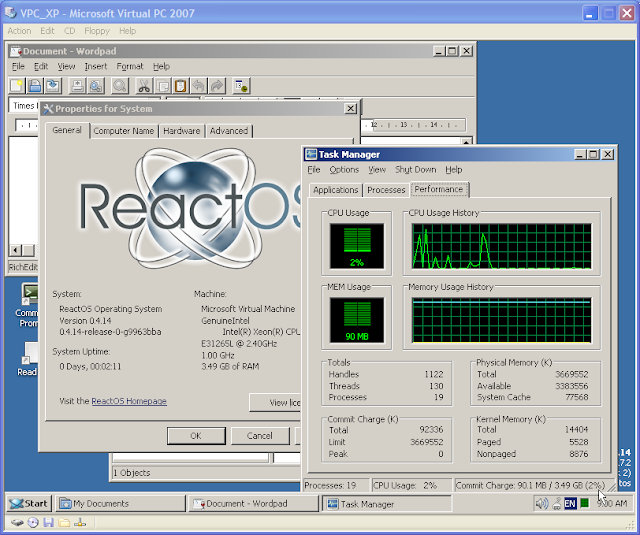
After being not bootable for long time, finally ReactOS 0.4.14 is run on Virtual PC 2007 again! This opensource NT5 remake project are closely related to wine and mingw which quite helpful to enhance XP. 

ReactOS 0.4.14


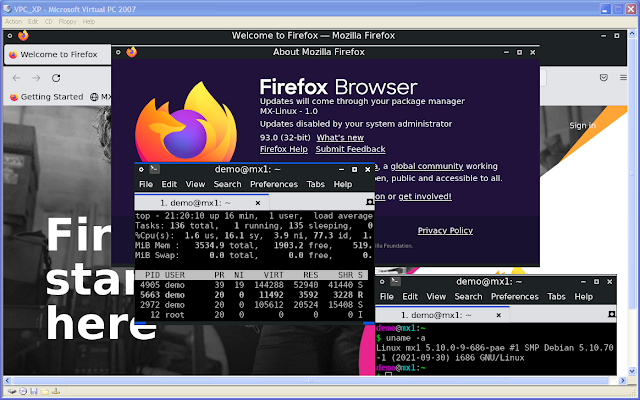
On other hand I'm checking out what's the greatest 32-bit mainstream Linux distro available for Virtual PC, MX Linux 21 (Linux 5.10 LTS) is one of few. This "lightweight" fluxbox variant shown running Firefox 93. Booting took some minutes though.

MX Linux 21

I've kept some historical 32-bit Linux distros iso that compatible with VPC as well:

RHEL 6.10, Oracle Linux 6.10, CentOS 6.10 (Gnome 2, LK 2.6): the last true "LTS" (~10 years) 32-bit Linux, which demonstrate how far kernel 2.6 can be tweaked and enhanced through backport.
Chakra 2012.07 (KDE4, LK 3.4): a rare 32-bit KDE4 SC distro, if not the only one.
Tails 3.11 (Gnome 3, LK 4.8): Privacy oriented distro, a rare Gnome 3 with systemd that able to boot into desktop after a little while.
Xubuntu 18.04.5 (XFCE4, LK5.4): generally regarded as the last 32-bit Ubuntu.

18 December 2021

Resuming XPitory

In the past, I made promise about blogging more but deliver none. This time, I'm deliver some before blog it...

20 years after XP released, it still my main windows OS and without a doubt the greatest 32-bit OS of all time.

Now with everyone start ignoring its existence, it's a good time to officially call XP the center of 32-bit retrocomputing.
A time when 2GB ought to be enough memory for anything, a time when entire OS fits in a CD and a time when people care much about making lean and mean software.

Xpitory used to be a place where I put few port for XP years ago. Now I have new goal, this would host lots of opensource software for XP. It will start by providing development toolchain first.

The plan goes like this:

1) Toolchain (compiler, VCS, make-tools)
-- Clang/LLVM 10 + GCC 10 (done, GCC still uder testing)
-- Git 2.34.1/SVN 1.14.1 (done)
-- cmake 3.20, ninja 1.9, msbuild ??, meson ?? (cmake and ninja: done, newer meson need python 3.5: done, newer msbuild need mono 6.12: not started)

2) Command-line software. Nowadays the most powerful software to tackle modern task usually available from CMD box, they are more portable and easier to port to XP.
-- FFMPEG
-- VIPS + IM
-- more

3) GUI Software. This is the harder one, framework like Qt, GTK and WX are increasingly getting away from XP, especially when they put effort on HiDPI, touch awareness and fixes for Windows 10. Other such as the lame Electron should be ignored.
There has been significant growth on Qt5-based software, so putting a working Qt 5.15 on XP is priority. QtWebEngine dependency will be avoided while QtWebkit still possible. Few software still use Qt4, putting on version 4.8.7 with all unofficial fixes and add webp support to it would be nice.
GTK 3.x will be avoided. it's slow and it is the one that technically getting farthermost away from Windows. Focus will be on porting GTK2 software instead.
WxWidgets supposedly the most windows friendly, but I'm not familiar.. will see about it.
MFC: should be no problem, as long as < VS2019 16.8
FPC/Delphi: FPC still support XP, Delphi software known to use lots of delay-load dll to check compatibility.

30 March 2021

The state of Java 8 support for Windows XP

Java 8 has complex situation on the unsupported XP. Back in early versions, the installer will warn user that it require newer windows and may not functioning as specified if user proceed. Indeed things start to break one by one, as a software platform runtime it might not obvious when it works or not that's until we ask specific broken component otherwise JVM continue on happily.

These are several component that I notice breaks on XP.

U111: the last version where JavaFX component works

U241 and U242: the last version where crypto API works (sunmscapi), newer version require NCrypt (part of MS CNG alongside BCrypt)

U261/U262: add TLS 1.3 support (jsse) and since it is related to sunmscapi it's pointless for XP, also in this version java executables no longer runnable on XP as their PE header set against NT6. It can be fixed to run on XP but doing so will break digital signature.

In my experiment we could mix newer java binary with older working component e.g. JavaFX or Crypto API, as long as they replaced as whole (dlls and jars).

Another complication, U151/U152 is the last installable version and U201/U202 is the last Oracle version which allow commercial works. On recent non-installable version user can opt to use tar.gz format (manual install) which need manual java -jar invocation from cmd prompt.

The alternative openjdk aren't that good either, so far only AdoptOpenJDK provide 32-bit binary and they dont bundle brower plugin or JavaFX furthermore all version has PE header set to NT6 so they are not runnable on XP.

Java 8 scheduled to be supported until 2026 for openjdk and 2030 according Oracle. Too bad XP version ended too soon.

AFAIK now the only still updated Java that works on XP 32-bit is IBM J9 Java 7 which can be downloaded separately from Websphere albeit not as installer (need free account login) and this will last until 2022. Not much I would say.

18 December 2020

Windows XP on the limit

 What is the maximum processor XP support?

XP support up to 2-way SMP (2 sockets), with a maximum 32 logical processor cores in total or with HT/SMT disabled up to 32 physical processor cores. XP can fully utilise SSE processor such as Intel Westmere or AMD K10 and will/may run under newer processor but wont be able to use AVX/FMA.


What is the maximum memory XP support?

Since 1995 32-bit i686 Pentium Pro 150Mhz has 36-bit PAE to access up to 64GB, in 1998 Intel provide PSE-36 driver (similar to Gavotte Ramdisk) for Windows NT 4.0 to access upper memory as pagefile. Windows 2000 has PAE built-in, original XP/2003 support 37-bit PAE (a maximum of 128GB physical memory in accordance to 32-bit Xeon processor spec at the time) and fully enabled in Server 2003 datacenter at the cost of "bad" bundled driver removal, but then "revised" to 64GB because 32-bit Server 2008 can't do 128GB, meanwhile XP SP2 restricted to 4GB with all bundled driver preserved. These limits are artificial switch based on marketing or to reflect testing result. However within 128GB only up to 16GB can be normally used, the rest addresses need AWE. Regardless each 32-bit process still limited to a maximum 4GB address space or from user perspective it is more like 2GB maximum. x86_64 CPU PAE has been varied depends on timeline and target market such 39, 40, 46, 48, and 52-bit. Fully 37-bit PAE need 980MB (for address translation) within system VAS (1024-2048MB), in this case if /3GB (4GT) or /USERVA=3072 is set then nothing is left for system, so Windows limit PAE to 16GB furthermore /3GB may negate addressable memory by AWE.

At processes level additional memory tricks available for user VAS such PE large address aware flag (in conjunction with /3GB) and AWE which is similar to PAE at user VAS level. The PE's IMAGE_FILE_LARGE_ADDRESS_AWARE flag may allow a user process to use up to 3GB, an AWE capable program can claim chunks (each less than USERVA value, up to <128GB in total) of PAE memory and get each needed chunk swapped in and out within its USERVA range (2048-3072MB). Example of AWE program is 32-bit MS SQL server, Oracle DB and MySQL 4.1-5.0 the latter capable of up to 64GB AWE memory. Another technique to overcome user VAS limit is to have multiple child processes such in Chrome browser and ABBY OCR or employ multithreaded batch processing such in ppx2, "make", etc.

Pagefile, a virtual memory that reside in storage device can be specified as 16 4GB pagefiles or 64GB in total, overall 192GB of maximum combined memory in XP. Imdisk can use AWE to create virtual disk that in turn can host all possible pagefiles and/or as mountpoint/target for %TEMP%. Just because a system has a lot of RAM (>4GB) that doesn't mean pagefile can be turned off, in fact there can only be one usable <=2GB system VAS at any time which instanced together with user VAS in every 32-bit process, thus system resource could be depleted if it cut by huge PAE mapping. Pagefile will allow system to expand some cache and pool out of the confined system VAS which at worst is about <1GB in >4GB system with /3GB. This is contrast with 64-bit Windows situation at the scale of TB VAs which more than current average size of installed system memory.

32-bit processor which has 32-bit instruction is not necessarily also has 32-bit addressing (i386-i586) it can be more such as i686 or maybe less like some i286 variant including all current x86_64 processors. Memory limit has been a moot point when talking about 32-bit OS like XP, but workaround those limitations is what make it fun.


What is the maximum disk storage XP support?

While NTFS 3.1 can go up to 256TB, other limiters make a 256TB disk impossible. XP only support MBR disk which maxed at 2TB for 512b sector or 16TB for 4k sector which need proper 4Kn controller. Dynamic disk (stripe/span mode) support up to 32 512b sector MBR disk of total 64TB agregated disk storage. Note that BIOS/NTLDR do not support booting 4Kn disk neither GPT disk (accessible through third party driver such Paragon GPT). NTFS however allow mountpoint other NTFS volume as directory to combine space though it wont change the root volume size. The fastest non-raid disk on XP is SSD either through ahci m.2 pcie 3.0 such as Samsung SM951 or through dual port SAS12G such as Seagate Nytro, both up to 2.2GB/s transfer rate.


What is the maximum XP desktop/display can be?

XP desktop is a virtual screen at 32000*32000 size with maximum exposeable area of 128 Megapixel which make it somewhat "bigger" but also smaller than GPU limit of 16k*16k. A monitor is an inset that panning over that area. The 32K limit may come from DIB format limit which is signed 2^16 integer, not sure what 128 Megapixel limit is all about as such area at 32-bit color would "only" need half GB memory however many 32-bit image viewer known to have problem displaying >100MP image, Windows Picture and Fax viewer for example could display (full size) up to 131MP. There is little freeware called sdesk that allow you to "stroll" over entire virtual screen without extra monitors.

XP can manage/arrange up to 10 monitors some say 10 is also the limit of display adapter numbers (dual-GPU card is counted as 2). Because of this dual-head display driver often capable of abstract larger monitor by pre-joining (span mode) the two before reporting to Windows thus counted as one. XP allowed different vendor driver to coexist thus enabling non-accelerated "non-sync'ed" mosaic setup of heterogenous GPUs and monitors. VGA, DVI-DL (7.92Gb/s), HDMI1.4 (8.16Gb/s) and DisplayPort1.1 (8.64Gb/s) are supported in XP, with all digital ones should be capable of 32-bit color UHD @30hz (4*3840*2160*30) or 4k @24Hz or 2560x1600 @60hz.


What latest hardware technology that XP support?

(This info compiled from driver files and not necessarily tested)

10Gbps Ethernet: Intel 82598, x520, x540; Qlogic 8140/2, 8150/2; Emulex OneConnect 1010x, 1110x; Mellanox ConnectX I (all pcie 2.0)

10Gbps SATAe: ASMedia 106se

10Gbps USB3: ASMedia 1142-3142

12G SAS3: Areca 1226, 1883 (support 4Kn)

OpenGL 4.x, OpenCL 1.x: Intel HD/Iris Gen3-Gen4 (no OpenCL driver); AMD Terascale 2 - GCN 2 (Bonaire); Nvidia Fermi - Maxwell

Wifi 802.11ac, Bluetooth 4.2: Broadcom 43xx; Realtek 88xx
13 January 2019

Theoretical Optimal Machine for Windows XP

When Windows first released in 1985, eight years later Microsoft made the best 16-bit Windows in the name of Windows for Workgroup 3.11. Then another 8 years made the best 32-bit Windows called XP and yet another 8 years the best 64-bit Windows 7 was born.

After that PC kind of hit the wall in term of hardware requirement for general users, although clockspeed has been stagnant for different reason and CPU maker has to resolve to multicore and parallelism. For the memory usage, it is not the "640K ought to be enough for anybody." case but  it is 64-bit memory addressing that ought to be enough for anybody. The problem was serious that Windows even try to backpedal, adapt and imitate the supposedly inferior (by hardware resources) mobile platform to get new users. We have been in 64-bit x86 era for 15 years and in term of memory it is far from reaching the limit. Compare that to 16-bit and 32-bit x86 era which each last for a decade.

Going back to the title, by now we may count by hand the number of new hardware driver that support Windows XP so what the optimal hardware for 32-bit XP? Hmm... I imagine:

ASUS Z9PA D8 mainboard (a)
Intel Xeon E5-2673 v2 (b)
128GB DDR3-1866 Non-ECC UDIMM (c)

Geforce GTX 980 (d)
Matrox m9188 (e)
LSI MegaRAID 2208 (f)
Creative E-MU 1616m (g)
an extra USB 3.1 Controller in PCIe :)

(a) It's ATX and fit XP limitation of Dual Processor. All onboard components support XP.
(b) XP limit: max 32 logical processors, in this case HT is enabled. Using Broadwell,  E5-2697 v4 will be optimal without HT.
(c) XP supposedly see it through 37-bit PAE and could use RRamdisk to hosts  multiple pagefiles.

(d) CUDA 6.5.19 has official driver for it, Titan X is possible with DevId injection mod.
(e) The only video card support a  lot of monitors in XDDM mode, up to 8.
(f) ASUS special PIKE module for 8 channel RAID SAS 6G
(g) Although very old this is the only with good DAC/ADC, hardware DSP and EAX/gaming compatible.


Well using later Intel generation also works, but it wont be optimal as some component such 10G Ethernet or USB3 will be unusable/disabled. With such configuration I think even 32-bit XP can do amazing task as long as parallelism achieved by multi-processes  manner such master-slave processes or jobs queue manager for optimal memory usage.

19 January 2018

EulerOS 2.0 Test

EulerOS 2.0 is the (only?) freely available UNIX certified Linux distro, The other UNIX Linux: K-UX doesn't seems available separately (at least I can't find it).

version 2.0 with default Gnome 3
Made by giant tech manufacturer company Huawei, the OS name is not using "X" moniker like OSX, AIX or IRIX and we don't need to worry that the distro will be Chinese specific because the default language during installation is english.

Before that I found myself in confusion just trying to download it from http://developer.huawei.com/ict/en/site-euleros as pointed by earlier review, getting with registration shenanigans that ended with unresumable 4GB iso download. It turned own there is easier way just use the repo link here:

http://developer.huawei.com/ict/site-euleros/euleros/repo/yum/

There you'll find several versions, inside that you'll find os/x86_64/iso sub-directory leading to resumable iso download which literally contain the content of other directories. Note that version 2.0 has been recently refreshed (Dec 2017) with new kernel and packages on the level of CentOS 7.2 (which EulerOS based on). Therefor I found no additional packages in the site repo and you can just pointed repo.d config file to use directly your disc (unless you want updating).

Package naming follow CentOS but without "el7" moniker, that's make me suspicious if there any incompatibilities, for sure to comply with UNIX some modification needed for ex. the CLI userland
and compiler (GCC 4.8.5) may changed. So I try install several third-party packages such VirtualBox, old Acrobat Reader 9, Chrome and LibreOffice, everything works fine. Installing few "other" packages from CentOS repo also working. Note that with just 4GB repo EulerOS is severely lacking for desktop use, but mind you, this is a server-grade distro :).

I haven't investigate the userland changes (like if POSIX behavior become the default or not), actually I don't know where to get the sources for EulerOS.

Next I want to change the simpleton Gnome desktop with KDE which require borrowing lot packages from CentOS repo. If successful I may consider to really installing it along with Windows.